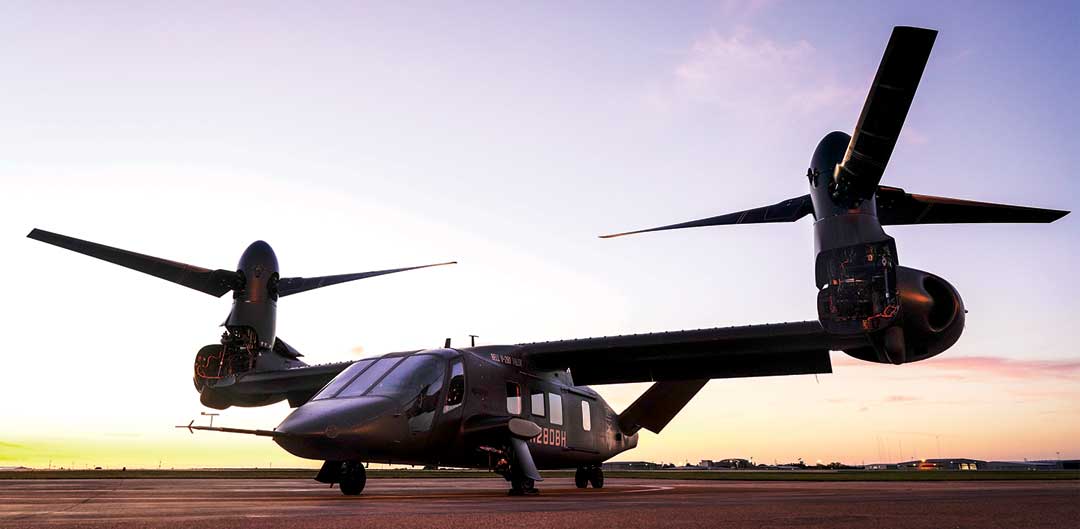
Bell V-280 Valor FRC 6-2020
(Photo credit: Bell Textron)
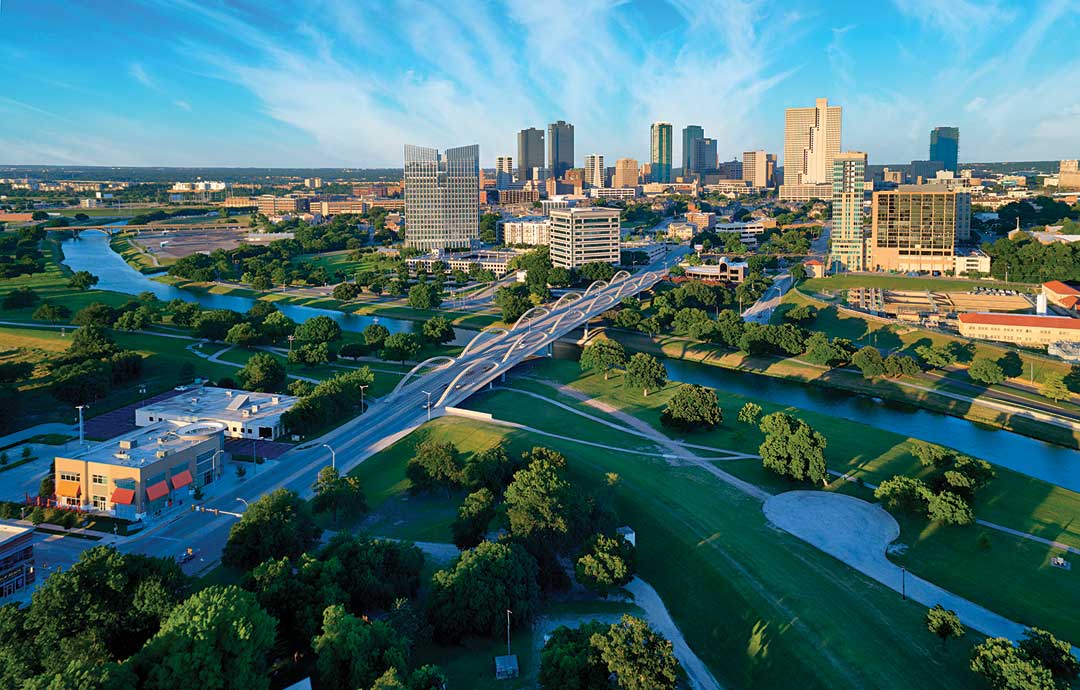
Fort Worth skyline
(Photo credit: Fort Worth Economic Development Partnership
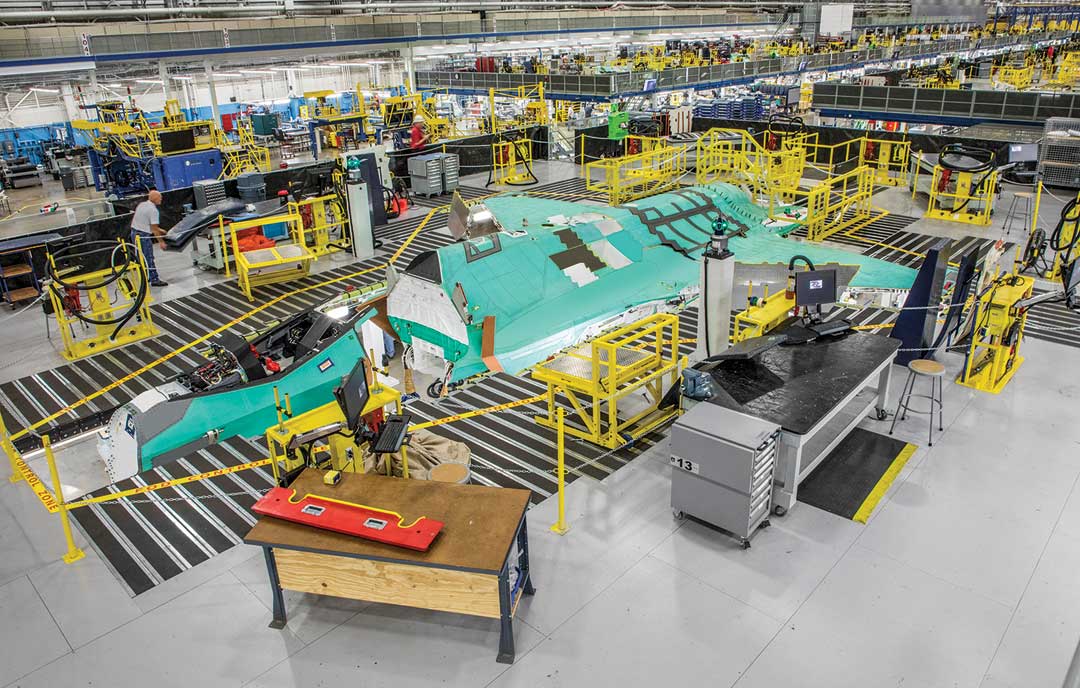
An F-35 during the build process on the factory floor.
(Photo credit: Lockheed Martin Aeronautics Company/Photo by Angel DelCueto)
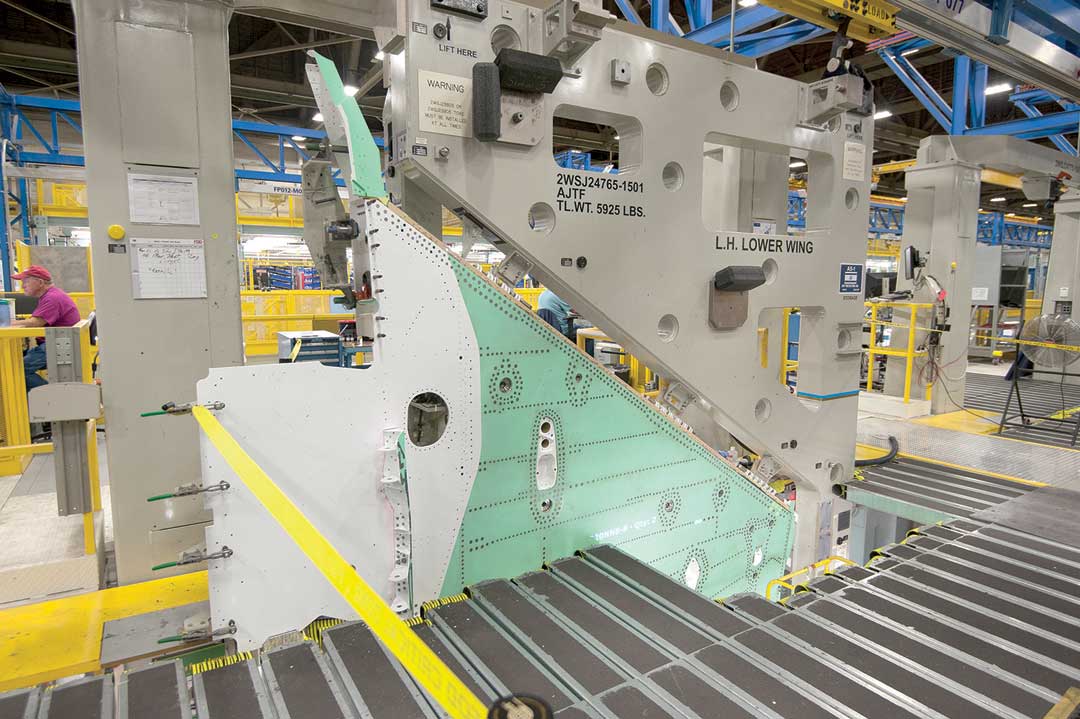
Delivery of fuselage and wings on factory floor
(Photo credit: Lockheed Martin Aeronautics Company/Photo by Beth Steel)
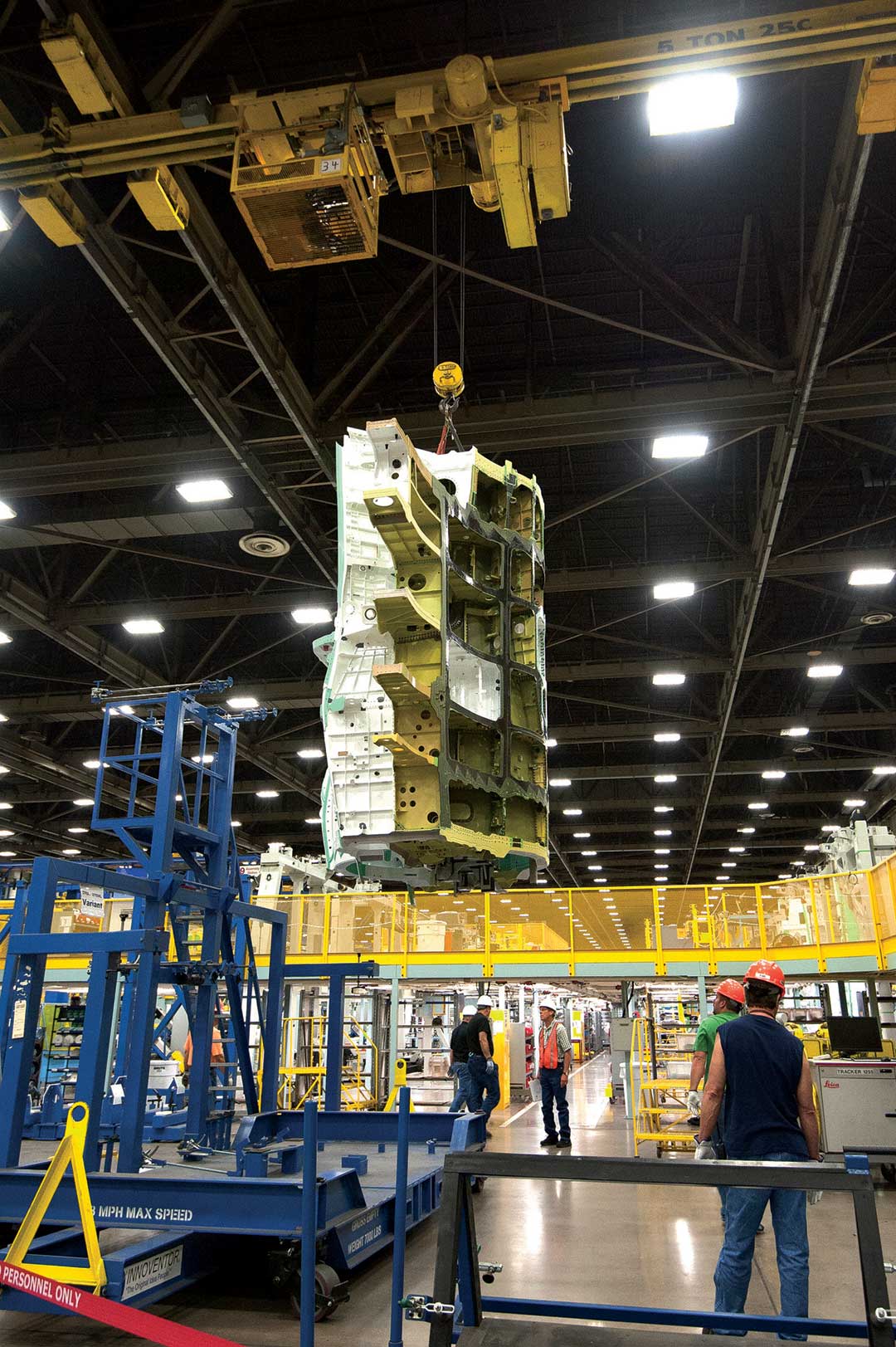
Delivery of forward fuselage to factory floor
(Photo credit: Lockheed Martin Aeronautics Company/Photo by Beth Steel)
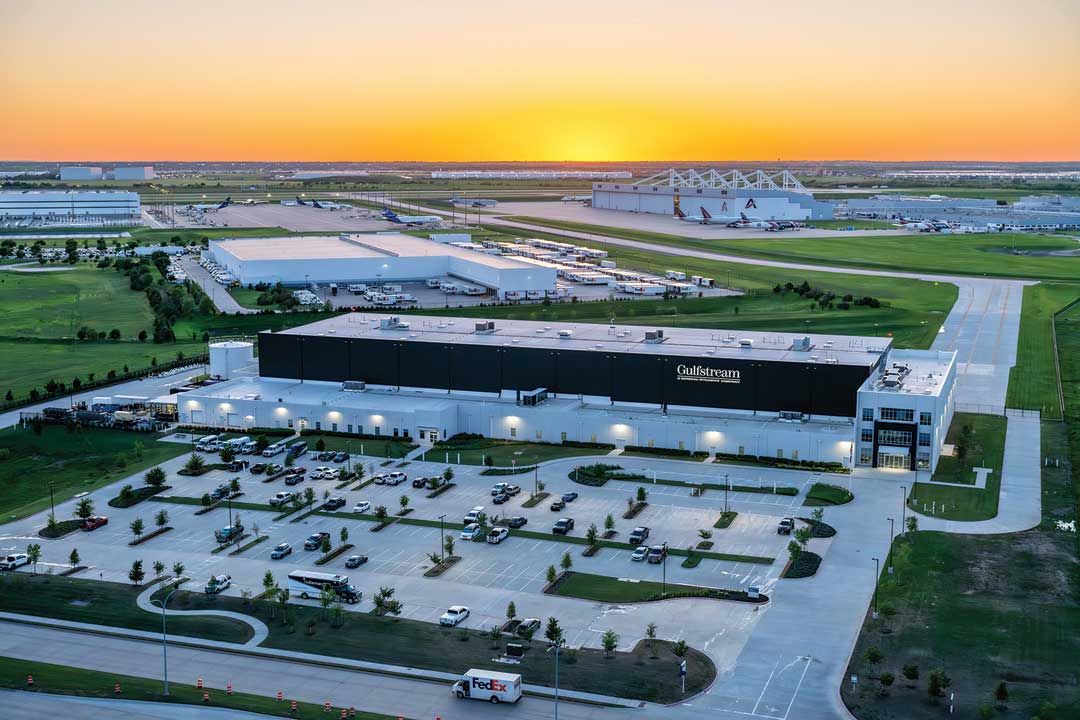
Alliance Airport
(Photo credit: Perot Field Alliance Airport)
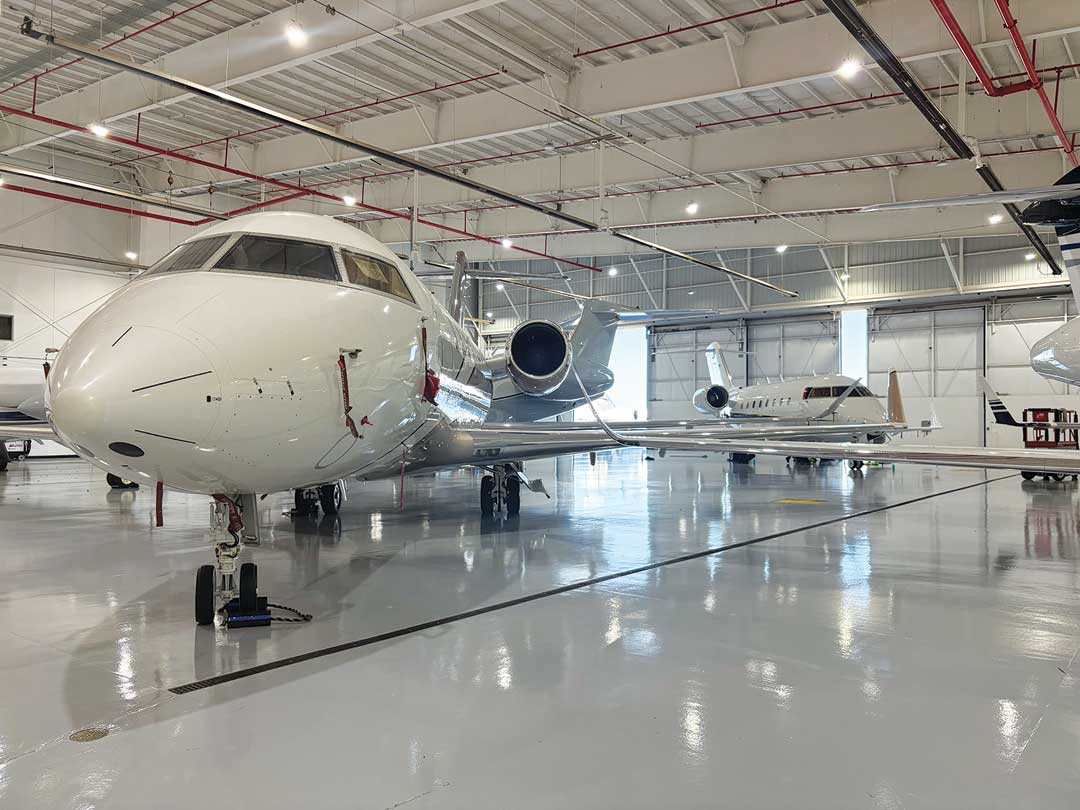
Beyond military traffic, the hangars at Perot Airfield are home to many corporate jets.
Fort Worth, TX, is leading the way in advanced manufacturing, with companies spearheading next-generation projects. These include Lockheed Martin's Aeronautics division, Bell Textron's Manufacturing Technology Center, Siemens' tech manufacturing facility, and MP Materials' manufacturing facility.
Fort Worth is consistently recognized among the nation's fastest-growing regions and now ranks as the 10th largest city in the U.S. Several factors contribute to this robust growth: easy access to DFW International Airport and Perot Field Fort Worth Alliance Airport; a skilled and growing workforce; and a business-friendly environment. With a central U.S. location and multimodal access, Fort Worth connects advanced manufacturers to key markets and fuels innovation through lower operating costs, strong public-private partnerships, and expanding R&D investment.
The Fort Worth region is one of the leading aerospace and defense hubs in North America, with more than 600 aerospace and defense companies anchored by Bell and Lockheed Martin.
Bell is investing $632 million in its 400,000-sq.-ft. manufacturing center where innovation meets manufacturing optimization for next-generation defense aircraft. "It is about creating a time and space away from a production environment to develop critical products," said Carter Biggs, Director of Manufacturing Innovation, Bell. "Our mission is about improving manufacturability, so we analyze everything from how we load and unload a machine, to how we hand it from one spindle to another and more, while taking into account the crucial features of the product."
The end goal: make it affordable and producible while maintaining critical precision.
Innovation is playing a huge role in that for parts, gears, cases, drives, and rotaries that Bell manufactures for its products, including the Bell MV-75 FLRAA (based on the V-280 Valor). The tiltrotor aircraft was selected by the U.S. Army for the Future Long Range Assault Aircraft (FLRAA) program.
"One such example is proprotor mast manufacturing, where we potentially reduced the lead time for that part from 330 days to 70 days with vertical integration," Carter noted.
With 150 employees and 100 advanced machines at the facility, Bell is currently using 3D printing and thermoplastics to improve production and stability of many products, always with an eye on innovation and efficiency. "We are considering secondary structure production in the future," Carter added.
Bell's investment is proof that the growth in the aerospace sector for this region is likely to continue, according to Robert Allen, President and CEO of the Fort Worth Economic Development Partnership (FWEDP). "It is a statement about Fort Worth's advanced aerospace and defense capabilities, now recognized by the governor as the aerospace and defense capital of Texas."
Fort Worth's aerospace sector is supported by Texas' top-ranked education network and more than $250M in federal aerospace R&D. The new Texas A&M Center for Advanced Aviation Technologies further positions the city as a hub for innovation and workforce development.
According to the FWEDP, more than 45,000 students are enrolled in programs in Tarrant County, including Tarrant County College (TCC), Texas Christian University, Texas A&M Fort Worth, University of Texas at Arlington, Texas Wesleyan, Tarleton, as well as local high schools and trade schools where hands-on training for in-demand trades helps supply employers with the skilled talent they need for today's manufacturing.
Furthermore, Lockheed's Ken Ross, Director, Communications, noted the aerospace giant works with several organizations and nonprofits to identify and encourage gifted elementary, junior high and high school students interested in science, technology, engineering and math (STEM), including Project Lead The Way (PLTW) and Tarrant To & Through (T3) Partnership, among others. The FIRST Robotics program is another educational program that pairs students with a mentor, and has seen great success, Ross added.
Lockheed's own corporate internship program is also helping to train students to fill the skills gap within manufacturing, whether on the production line or in R&D. High school and college students can create a path to STEM careers, and those students who excel may even come away with job offers upon graduation, as did Mia Flores, a former Fort Worth ISD student turned engineer. Although Flores' journey started as a 17-year-old high school intern, she now holds a bachelor's degree in engineering from University of North Texas. "She is now an engineer on our F-16 Program," Ross stated.
Flores is just one success story. In 2025, Lockheed had 20 interns, but Ross said the company has had as many as 50 in a year. From the conception of its program in 2014, Lockheed has "about a 65% retention rate" among high school interns who continued as college interns and full-time employees, Ross said.
Additionally, located next door to Lockheed is a technical nonprofit school, the Pat Lane Center and Community Learning Center, offering classes and certification in CNC Machining, Aerospace, Welding, Logistics, and more.
Lockheed's aeronautics division boasts 35,000 employees globally and 19,500 of those are in Fort Worth, with another 4,000 at its nearby Grand Prairie facility.
Helping to train the next generation with a skilled, educated workforce, ensures Lockheed will be able to meet the requirements of its many government and NASA contracts.
"The C-130 is the longest running production at Lockheed," Ross noted. "And we have a backlog of F-16s; we initially thought we would produce 25 when we opened the production line in Greenville, SC."
Today, the F-16 is integrating innovations that produce an incredibly advanced fighter jet. Lockheed boasts 3,100 F-16s operating in 29 countries.
With increasing demand in aviation, as well as other industries, an educated workforce is essential, and Fort Worth is poised to be able to provide that, not just for Lockheed and Bell, but other manufacturing companies as well.
For more information contact:
Fort Worth Economic Development Partnership
www.fortworthedp.com
Bell Textron
www.bellflight.com/
Lockheed Martin
www.lockheedmartin.com