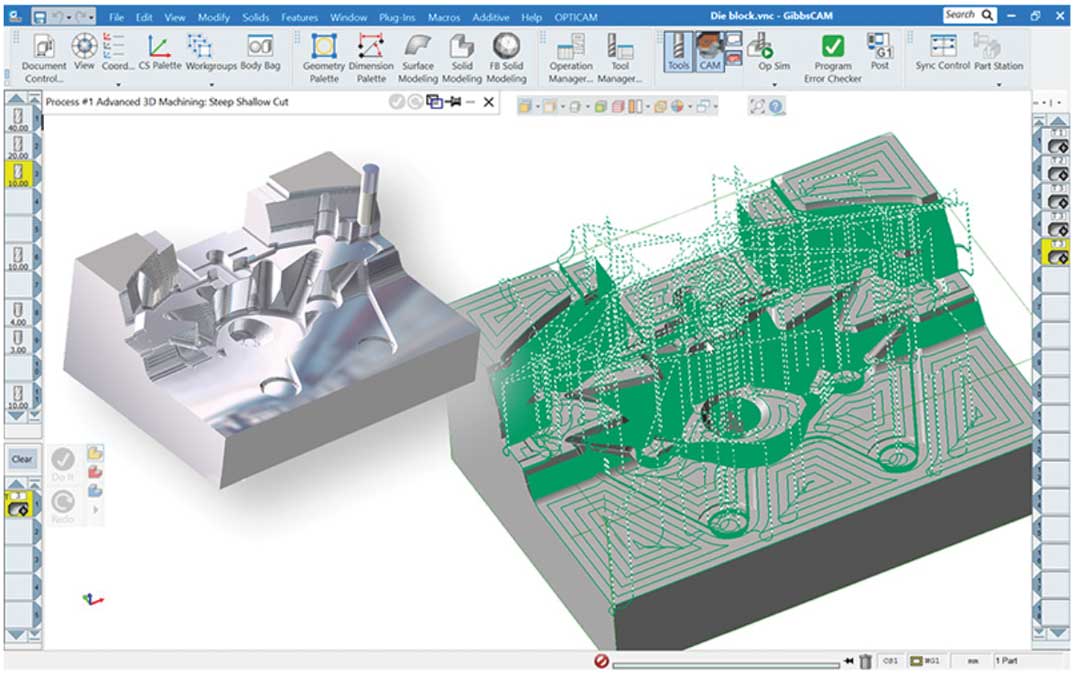
The new Advanced 3D Machining engine in GibbsCAM 2026 delivers faster toolpath generation and improved surface quality with the same familiar interface.
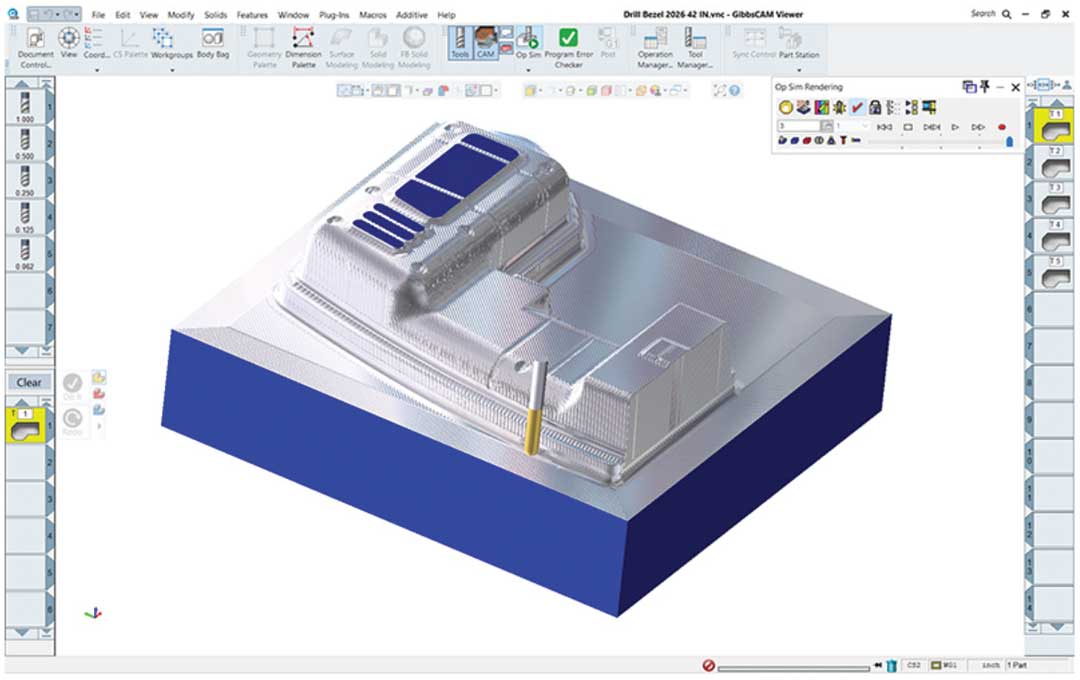
GibbsCAM Viewer enables company-wide visualization and analysis of CAM data while preserving a familiar user experience.
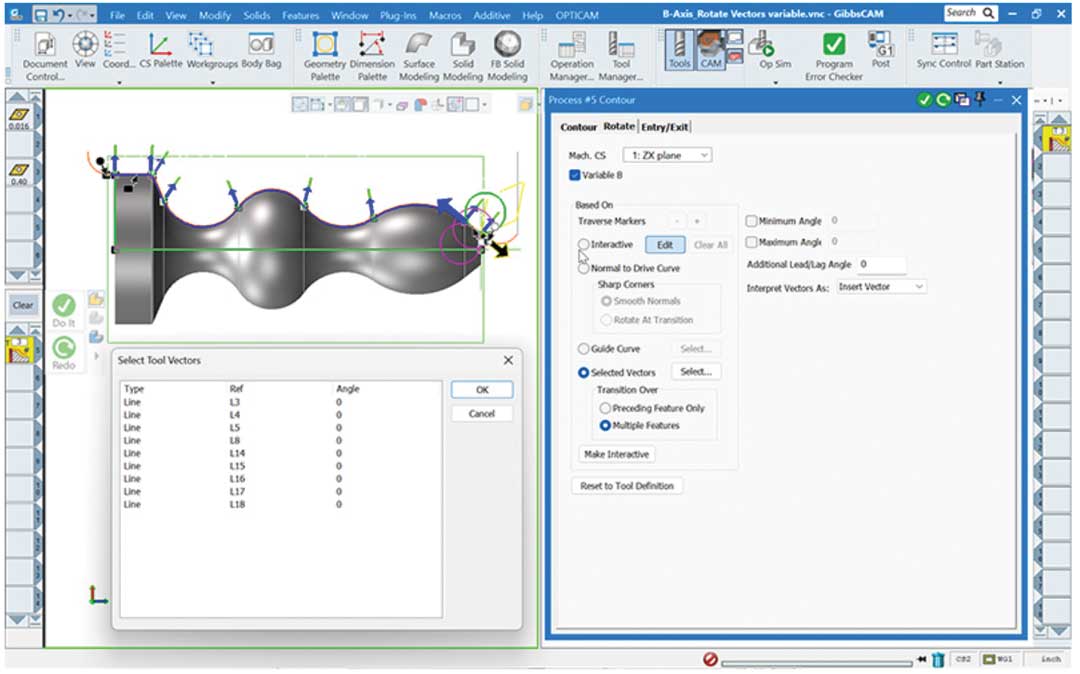
GibbsCAM 2026 improves Variable-B Turning with interactive control points, enabling smoother, more accurate machining and reduced setup effort.
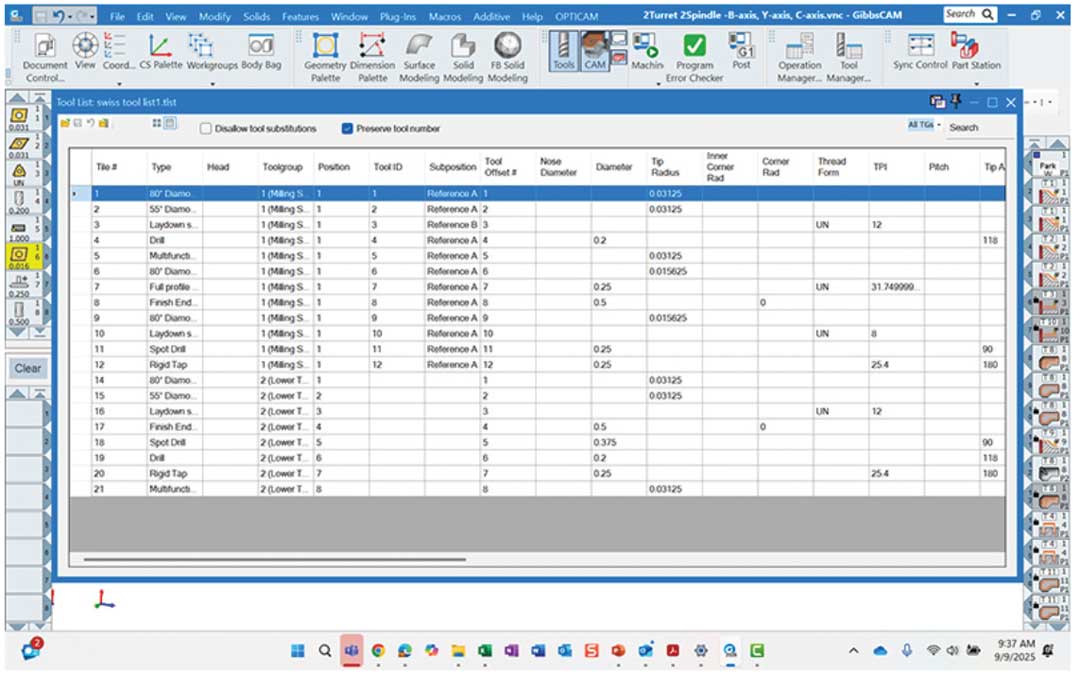
GibbsCAM 2026 streamlines tool management with a new usage reporter and enhanced list view, giving faster control and more transparent oversight in complex projects.
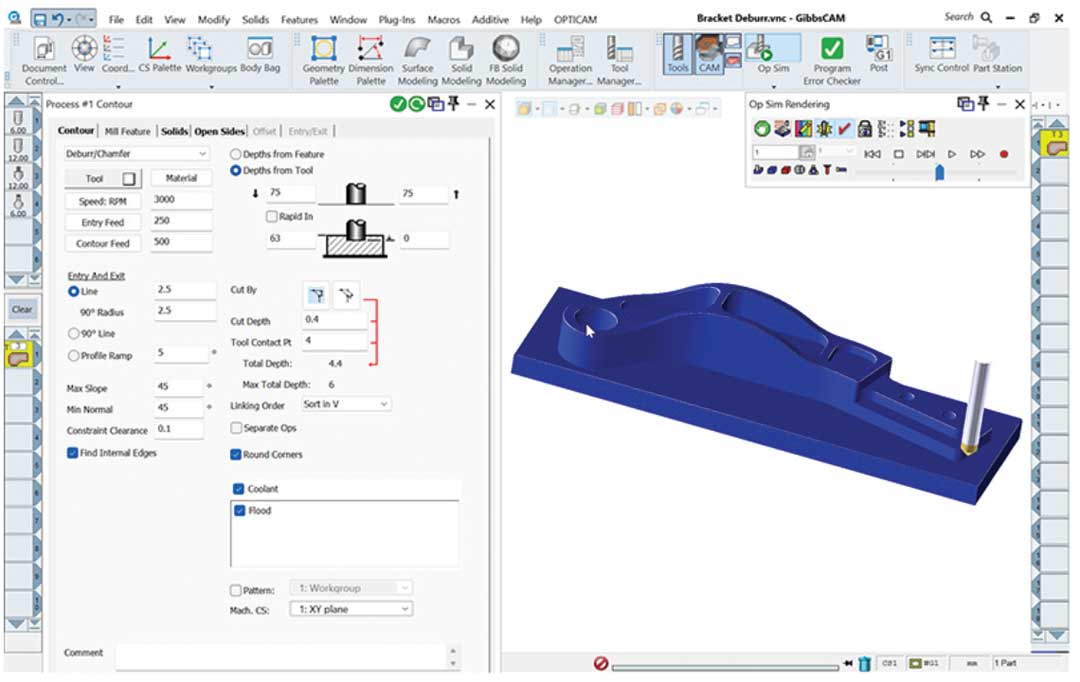
GibbsCAM 2026 simplifies and automates edge finishing with specific tool types, applying automatic deburring and chamfers efficiently.
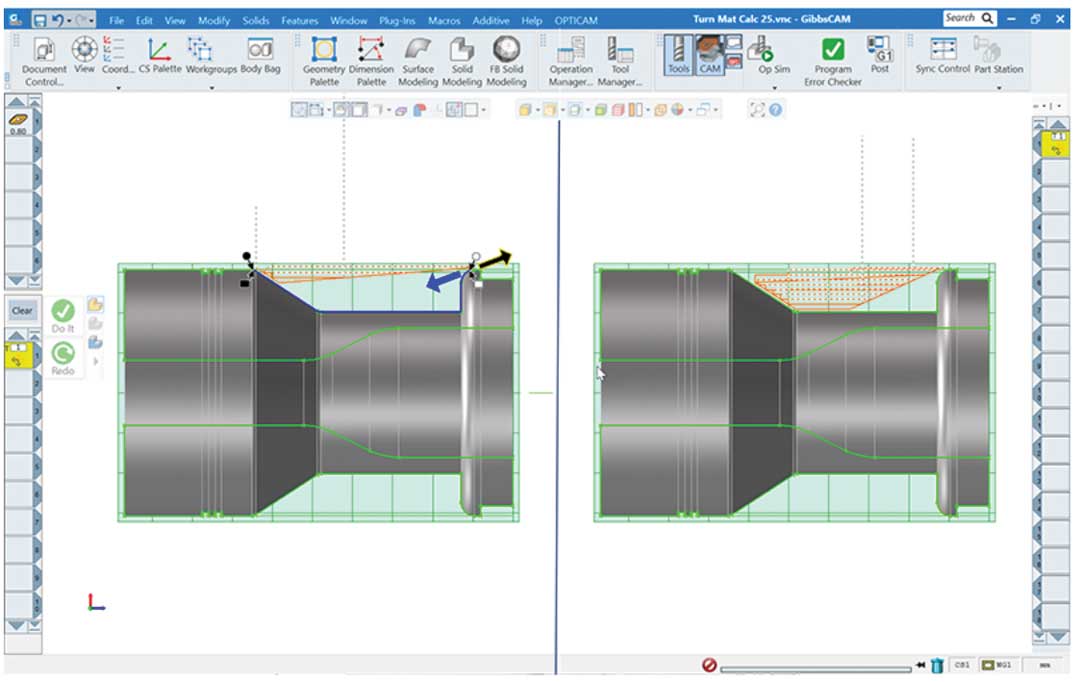
GibbsCAM 2026 optimizes toolpaths for multi-sided turning tools, such as Sandvik Coromant's CoroTurn Prime inserts, for a more efficient material removal.
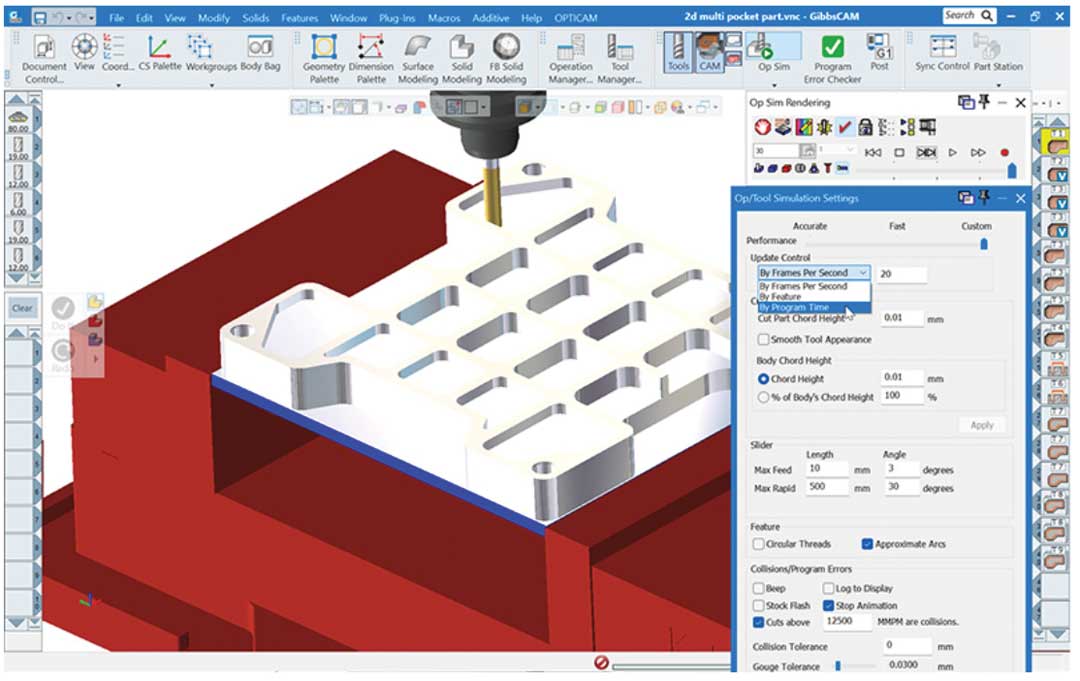
GibbsCAM 2026 adds metallic rendering for tools, fixtures, and simulation highlights, improving visual clarity and realism during simulation.
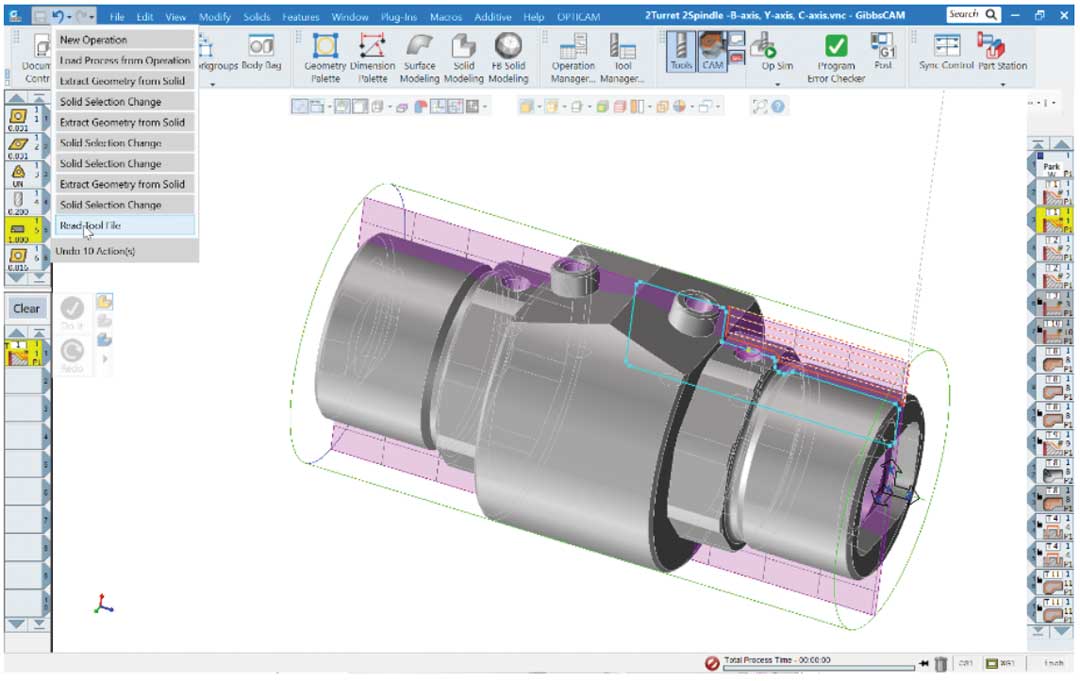
GibbsCAM 2026 streamlines Undo and Redo by letting users jump directly to any point in their action history.
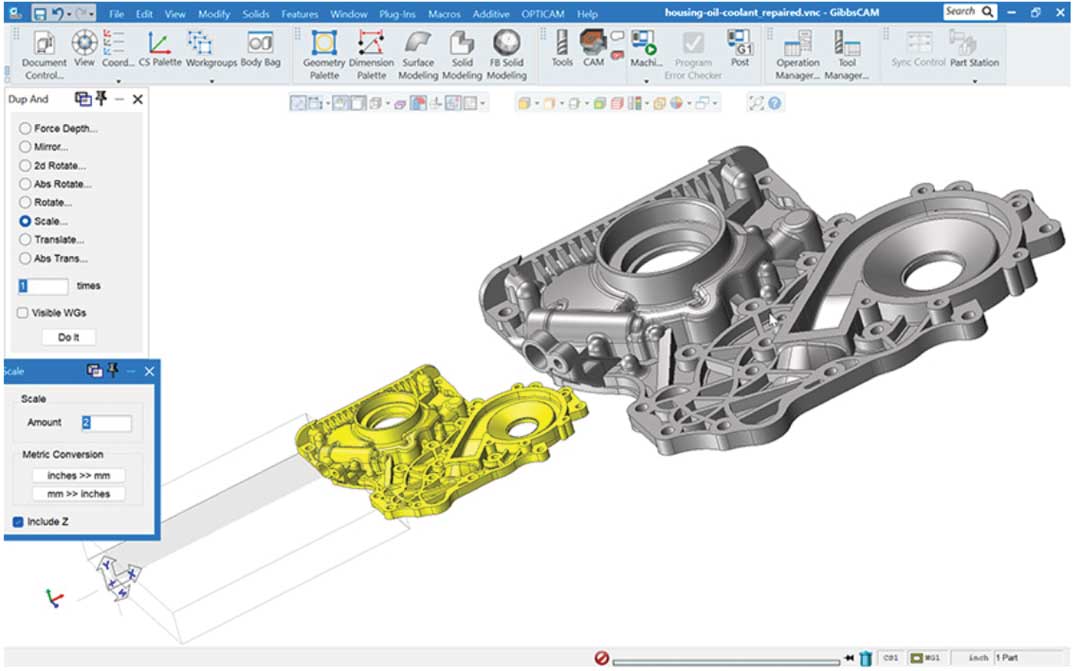
GibbsCAM 2026 enhances geometry control by enabling precise scaling of solids and sheets, and nonplanar rotation around any axis with live previews.
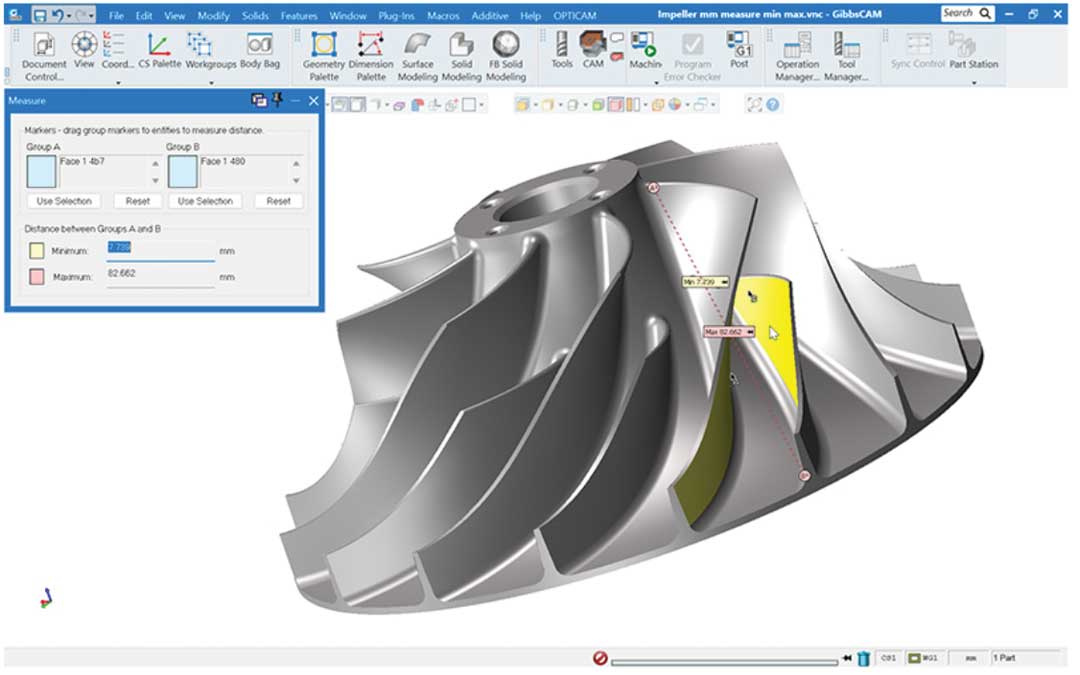
GibbsCAM 2026 enhances measurement functionality by showing min/max distances between 2D or 3D elements for more clarity during part inspection and setup verification.
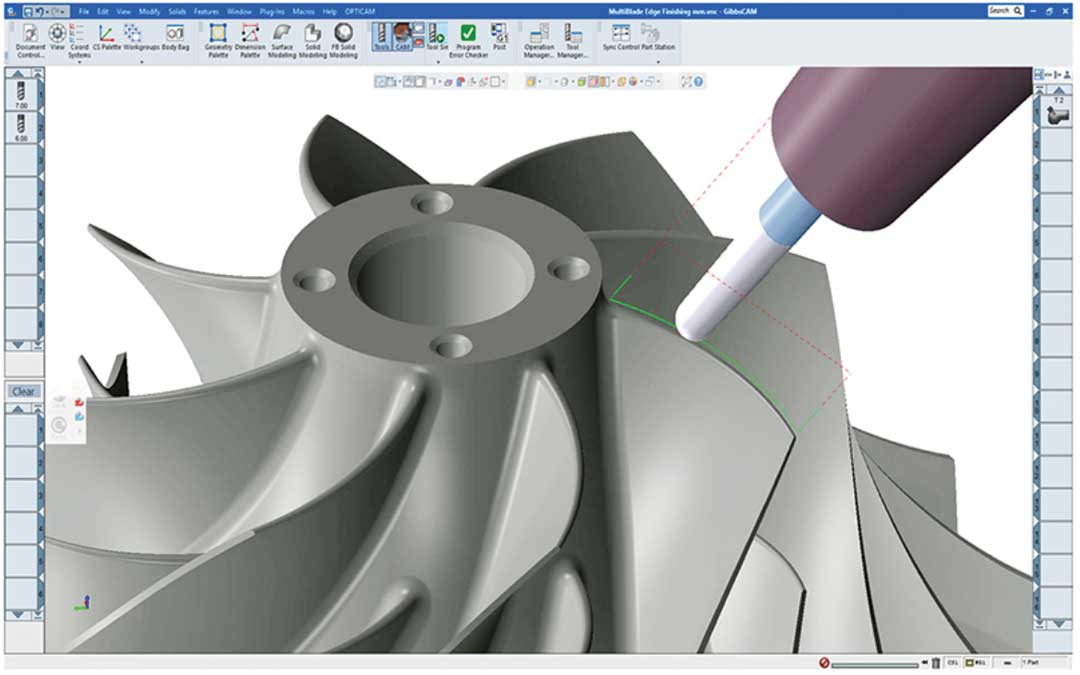
GibbsCAM 2026 enhances multiblade machining with advanced edge finishing, expanded tool options, and optimized feed control for greater efficiency.
GibbsCAM, a CAD/CAM innovator in the production machining industry, has released its latest version. The highlight is the new Advanced 3D Machining engine, offering faster calculation times, more efficient toolpaths, and improved surface quality. Alongside this achievement, GibbsCAM 2026 continues to enhance usability with a more intuitive user interface, a new GibbsCAM Viewer for company-wide data access, and improvements in Variable-B Turning. Additional upgrades strengthen multi-axis machining, tool management, and simulation capabilities.
At the heart of GibbsCAM 2026 lies a completely re-engineered Advanced 3D Machining Engine. This new core offers significant gains in toolpath generation speed, enabling faster programming cycles and fewer iterations. It produces smoother, more predictable toolpaths, leading to enhanced surface finishes and a reduced need for secondary finishing, the company reported. Despite the major architectural shift, the familiar GibbsCAM interface remains unchanged, allowing users to benefit immediately without requiring retraining.
GibbsCAM Viewer-Access for the Entire Enterprise
With GibbsCAM Viewer, organizations gain the ability to review, inspect, and communicate CAM data anywhere in the company-without risk of altering toolpaths or NC code. Operators, managers, and quality teams can visualize parts, verify geometry, analyze toolpaths, and generate reports using the same familiar interface. This tool streamlines communication and helps reduce errors while keeping programming data secure. Machinists can now run parts with greater confidence and knowledge of what to expect.
Advancements in Turning and MTM Programming
GibbsCAM 2026 enhances Variable-B Turning with a more intuitive, interactive workflow. Programmers can define tool angles directly along the cut path using control points, with smooth interpolation for precise control over complex operations. This makes Variable-B Turning more flexible and easier to use, reducing set-up effort while improving accuracy.
For multi-sided turning tools such as Sandvik Coromant's CoroTurn Prime inserts, toolpath generation is now smarter and more efficient. The system calculates material engagement intelligently, maximizing insert geometry while maintaining safety. The result is improved material removal, consistent operation, and greater efficiency in advanced turning tasks.
Smarter Tool Management
GibbsCAM 2026 introduces the new Tool Usage Reporter, offering precise, operation-based tracking of all tools. Accessible directly from the Tool dialog, this manager-style interface displays every operation that uses a selected tool, with intuitive row selection, workspace highlighting, and direct access to operation controls. Users can quickly identify, select, or remove tool-linked operations, making tool management faster and more transparent.
The release also brings a redesigned, spreadsheet-style Tool List View, providing a clear, column-labeled layout for reviewing and editing tools. Both the standard and list views now include filtering by tool group, enabling users to isolate and manage specific sets of tools easily. Together, these enhancements simplify tool organization, improve workflow efficiency, and give programmers better oversight of tool usage in complex projects.
Expanding Multi-Axis and 5-Axis Capabilities
GibbsCAM 2026 further refines multi-axis machining with advanced tilting strategies, improved AutoTilt functionality, and smarter toolpath orientation to reduce unnecessary machine movement. The AutoTilt feature now supports bullnose tools, increasing versatility. Two new strategies, Tilted into Plane and Tilt Tool in a User-defined Plane, provide programmers with precise control over tool axis orientation, aligning tilt with specific rotational axes for more stable and efficient machining. The enhanced automatic tilting kernel helps ensure consistent results across existing toolpaths, simplifying the adoption of the latest features.
Multiblade machining also sees significant improvements. The new Edge Finishing strategy delivers high-quality surface results while protecting delicate leading edges, and expanded tool support now includes flat end mills, bullnose mills, and taper tools. Users can customize feedrates for links, lead-ins, lead-outs, and edge extensions, reducing noncutting time and optimizing cycle efficiency.
Additional upgrades include enhanced wall finishing, improved rotary machining finishing, and more effective deburring, giving operators greater control, speed, and precision across complex multi-axis operations.
More in GibbsCAM 2026
GibbsCAM 2026 has even more to offer, with a broad range of usability and simulation enhancements that streamline programming and improve workflow clarity. Users can now scale solids, sheets, and facet bodies with precision, rotate geometry out of plane without complex workarounds, and measure minimum and maximum distances for improved part inspection. Stock definitions are more accurate due to improvements like cylindrical Shrink Wrap, while Undo/Redo history navigation provides quick access to any point in the design process. Simulation playback reflects actual machining time and includes metallic rendering options for enhanced visual clarity. Together, these upgrades make GibbsCAM 2026 faster, more intuitive, and more reliable for complex machining operations.
Stronger Portfolio with New Partner Solutions
Over the past few weeks, GibbsCAM has expanded its portfolio with various new partner technologies that enhance performance and automation capabilities. VERICUT Optimizer for GibbsCAM dynamically adjusts feedrates to maintain ideal chip thickness. The result: 15 to 30% faster cycle times, longer tool life, and consistent cutting quality, without changing proven GibbsCAM toolpaths, the company reported.
ToolManageriQ provides centralized management of tools, holders, and fixtures through a robust SQL database. Fully integrated with GibbsCAM and available in a standalone version, it eliminates duplicated work, improves collaboration, and ensures reliable access to accurate tool data across the organization.
Launching alongside GibbsCAM 2026, CloudNC CAM Assist for GibbsCAM introduces cloud-based AI automation for CNC programming. The system can generate complete 3-axis and 3+2 toolpaths directly from GibbsCAM session data, significantly reducing programming time and helping companies address the shortage of experienced programmers.
For more information contact:
GibbsCAM
2545 W Hillcrest Drive
Suite 210
Thousand Oaks, CA 91320
805-523-0004
www.gibbscam.com